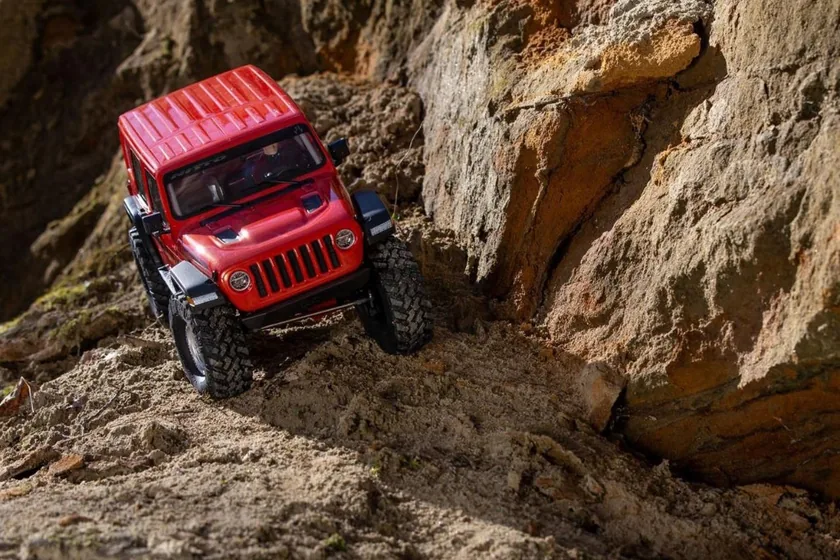
Rocks, roots and trails
Crawlers & trail trucks
Low gearing and flexible suspension help you place a tire precisely.
Trade-off Low gearing limits pace on open ground.
Browse crawlers & trail trucksLearn how an RC car works, choose a type for where you drive, and check the real size and what comes in the box before you buy.
See what happens when you steer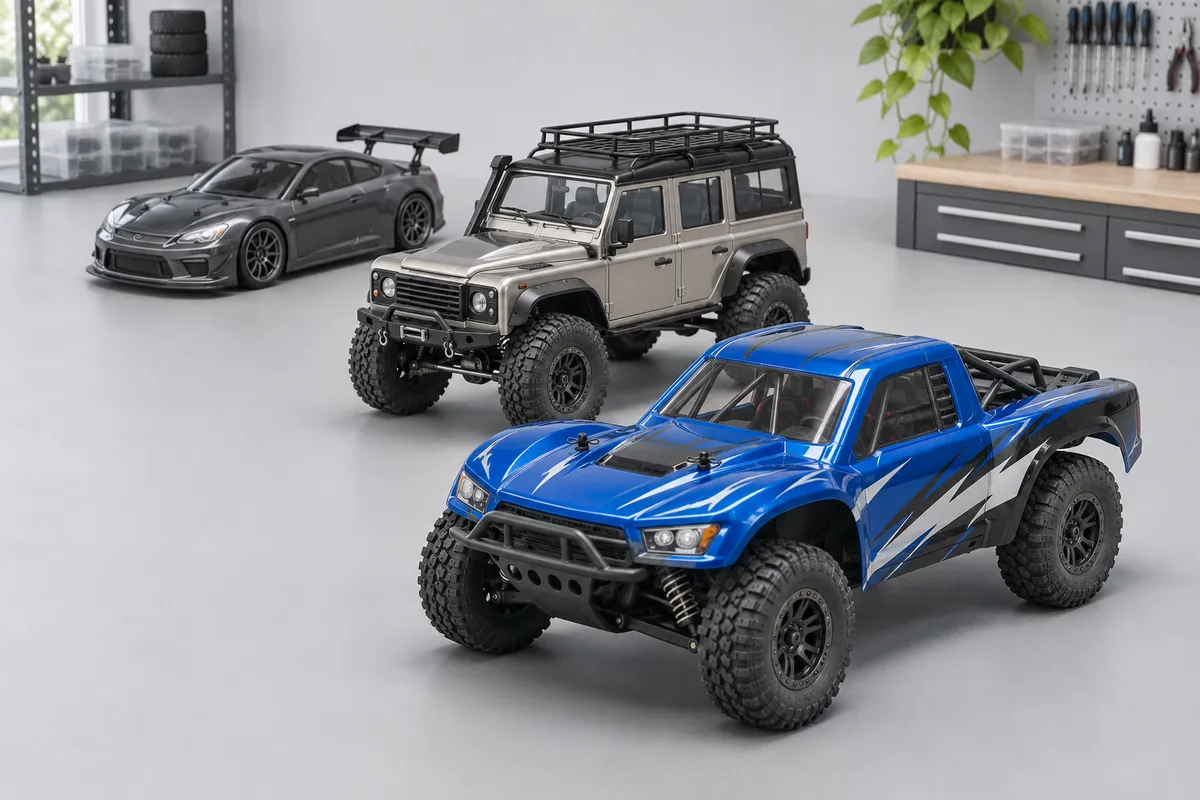
The controller in your hand is the transmitter. Its side wheel tells the car how far to turn. Its trigger tells the car how much power to send to the motor. The picture follows the commands and the power through a typical electric RC car.
The side wheel commands steering. The trigger commands speed. The radio has its own batteries.
Listens to the radio and sends the two commands down separate cables.
The servo arm pushes a link that turns the front wheels.
Varies the drive power reaching the motor.
Plugs into the ESC.
Spins the gears that turn the wheels.
One cable, two jobs. In many setups the ESC also sends a lower, steady voltage back through its receiver lead. That powers the receiver and the servo.
The receiver and ESC share a housing. The throttle command stays inside it. The servo, motor and battery still have their own connections to the box.
Combined receiver and ESC: One box takes up less room and needs fewer wires, which can help keep the price down. The two functions are sold together as one replacement part.
Separate receiver and ESC: Two boxes need more space and a cable between them. Each can be replaced independently with a compatible part.
Picture a curb beside a car park. A low road car can turn neatly on the pavement, then catch its bumper at the curb. A crawler can climb the edge slowly because its large tires reach higher and its gears make it easier to move a little at a time. Here’s how the same trade-off shows up elsewhere.
Crawlers & trail trucks
Low gearing and flexible suspension help you place a tire precisely.
Trade-off Low gearing limits pace on open ground.
Browse crawlers & trail trucks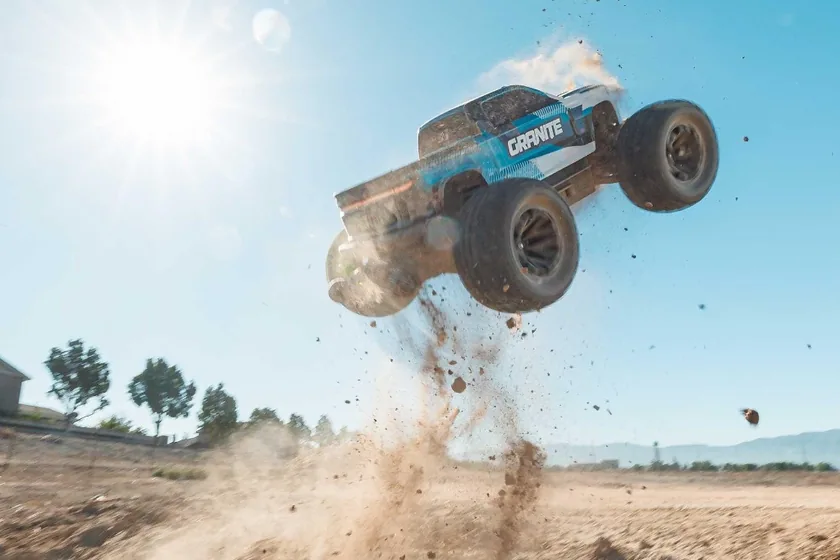
Monster trucks & bashers
Large tires and suspension travel let you carry speed over bumps.
Trade-off A tall stance can roll in tight turns, and big landings load the drivetrain.
Browse monster trucks & bashers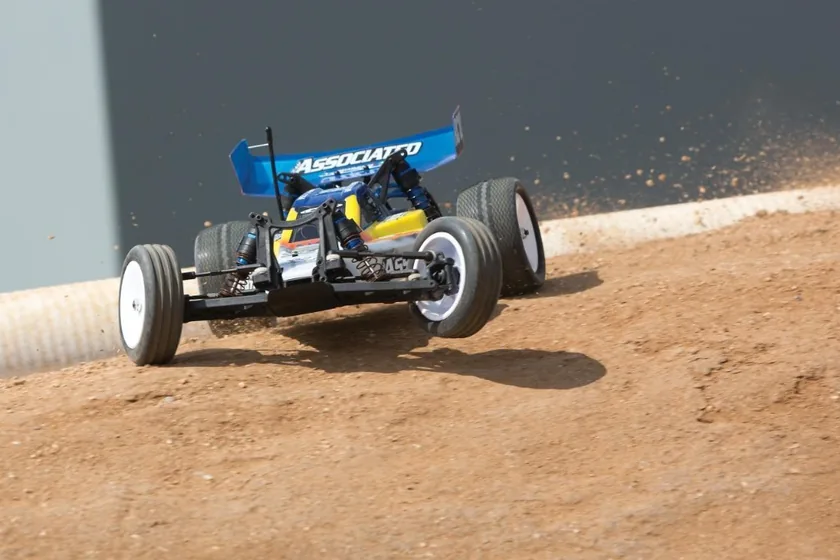
Buggies & truggies
A low buggy feels precise through corners. A truggy usually adds tire size and clearance.
Trade-off A low race setup can bog down in deep grass or ruts.
Browse buggies & truggies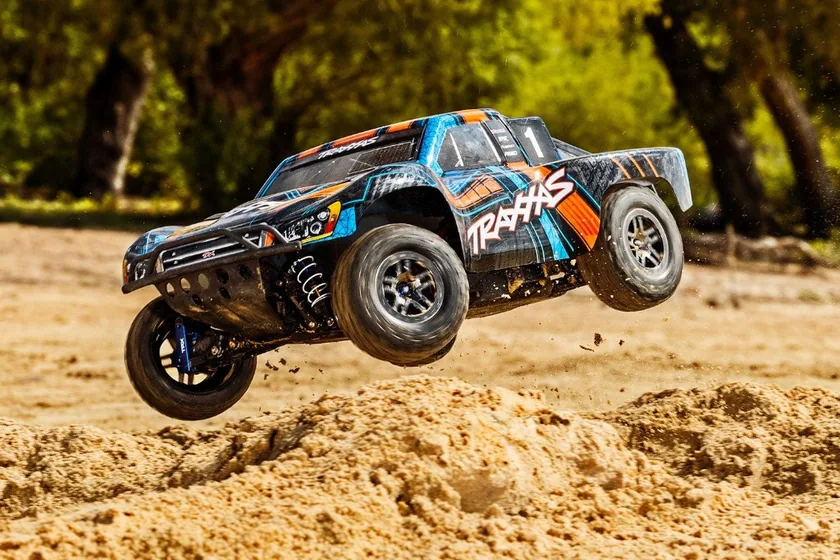
Short-course & desert trucks
Truck bodies and suspension are shaped for bumps, slides and jumps.
Trade-off A broad shell can catch air on jumps. Clearance varies by chassis.
Browse short-course & desert trucks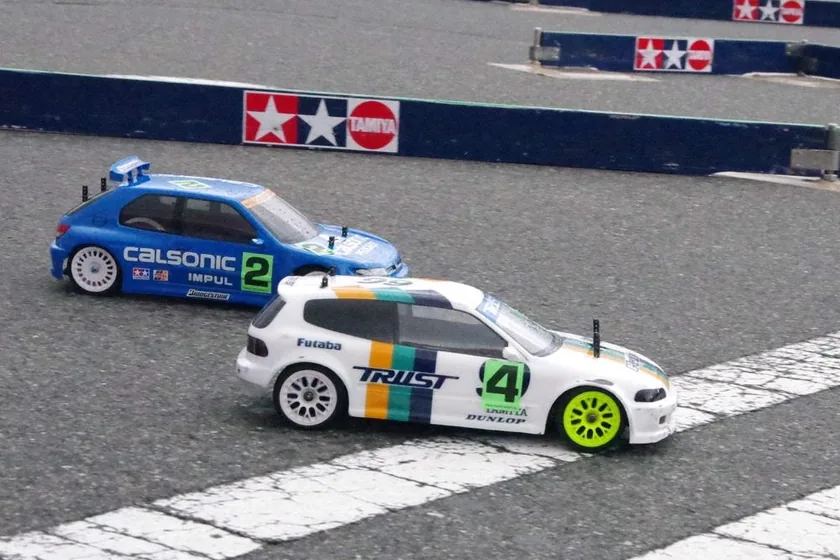
Touring & rally cars
Touring cars turn precisely on smooth ground. Rally setups can add clearance for loose surfaces.
Trade-off Tall grass and deep ruts can stop a low chassis.
Browse touring & rally cars
Drift cars
Low-grip tires and steering geometry help you hold a controlled slide.
Trade-off Surface and tire choice matter more to the experience than outright speed.
Browse drift carsTwo cars can look similar in a listing and feel different in the same yard. Use the specs to picture where you’ll turn, what the car needs to roll over, and how much room you’ll have to accelerate.
Labels like 1/10, 1/18 and 1/24 describe the scale the manufacturer uses for its design. If a 4 m car were shrunk exactly to 1/10, the model would be 40 cm long. A longer full-size pickup would produce a longer model at that same ratio. The manufacturer can also adjust the model’s proportions to suit its chassis or wheels. For the size of the RC car you’re buying, use its measured length.
Use those references to picture how much floor or shelf space the car takes up. If you have a narrow route or storage box, use the car’s actual width and height as well.
With 2WD, the motor powers two wheels. That can be plenty on dry pavement or packed dirt. With 4WD, the motor powers all four wheels, giving the car more chances to find grip when a tire slips on loose ground.
A brushed motor uses small electrical contacts called brushes. Many ready-to-run cars use brushed motors to keep the price down. A brushless motor uses electronics to do the brushes’ job and is generally more efficient, so it can use less battery power for the same work. A brushless setup designed for crawling can move smoothly even when the wheels are barely turning. Other brushless setups are built for speed.
On grass, look for tires with taller tread and enough space under the car to keep the chassis from dragging. On smooth pavement, low ride height and pavement tires can help the car feel more settled in a turn.
Ready to run (RTR) means the car usually comes assembled with its electronics and a handheld radio. Open the exact bundle’s product description and look for “Needed to Complete” or “Required Items.” Order only what that list says you’ll need and don’t already own.
Often, the only extra is batteries for the handheld radio. Some larger RTRs leave the car’s drive battery and charger out so you can choose your own or use compatible ones you already have. If the description only calls for four AAs, that’s all you need to add.
Start with the constraint that would make a car frustrating to own. For example, if your usual spot is a small yard with grass and shallow ruts, you need tire clearance and room to turn. Compare trucks that meet both before you spend more for speed.
Pick the spot you’ll use most and what you want to do there. If you want to make fast turns on a smooth lot, start with on-road cars. If you want to clear rocks slowly, start with crawlers.
Measure the tightest space you’ll drive through and where you’ll store the car. Use actual width and length to rule out anything too large.
Add the cost of any essentials you still need to each car’s delivered price. Compare those totals against your budget.
Open the exact bundle’s “Needed to Complete” or “Required Items” list. It tells you what to supply separately. Order only the listed items you don’t already have.
A brushed ready-to-run car is a good place to start. Drive it as it comes and see what you’d like to improve. If you want to ease over rocks more smoothly, look for a brushless setup designed for crawling. If you want longer runs or stronger acceleration, compare cars built for those goals.
Open Size in the catalog and use Actual physical length. It compares the car from bumper to bumper with everyday objects, like two payment cards or the long edge of an A4 sheet.
A 2WD car can be plenty for dry pavement or packed dirt. On loose dirt or uneven ground, 4WD gives more wheels a chance to pull the car forward.