 Pace
PaceCan I afford time off work?
Start with what you would spend, what income would continue, and the money you want left when you return. Pace helps you compare a break with your current outlook.
Look at three things first.
- Money you can use. Include the wealth you actually plan to draw from.
- Costs that continue. Include living costs, debt payments and any extra costs during the break.
- Income that continues. Pausing one source does not have to mean losing every source.
A comparison gives you context. It cannot know when a new paycheck will arrive or what unexpected costs you might face.
Try the break before you commit.
Choose Take a sabbatical in Pace, set the dates and enter the income that would pause. Compare the result with your current outlook. Try a different length or spending amount to see what changes.
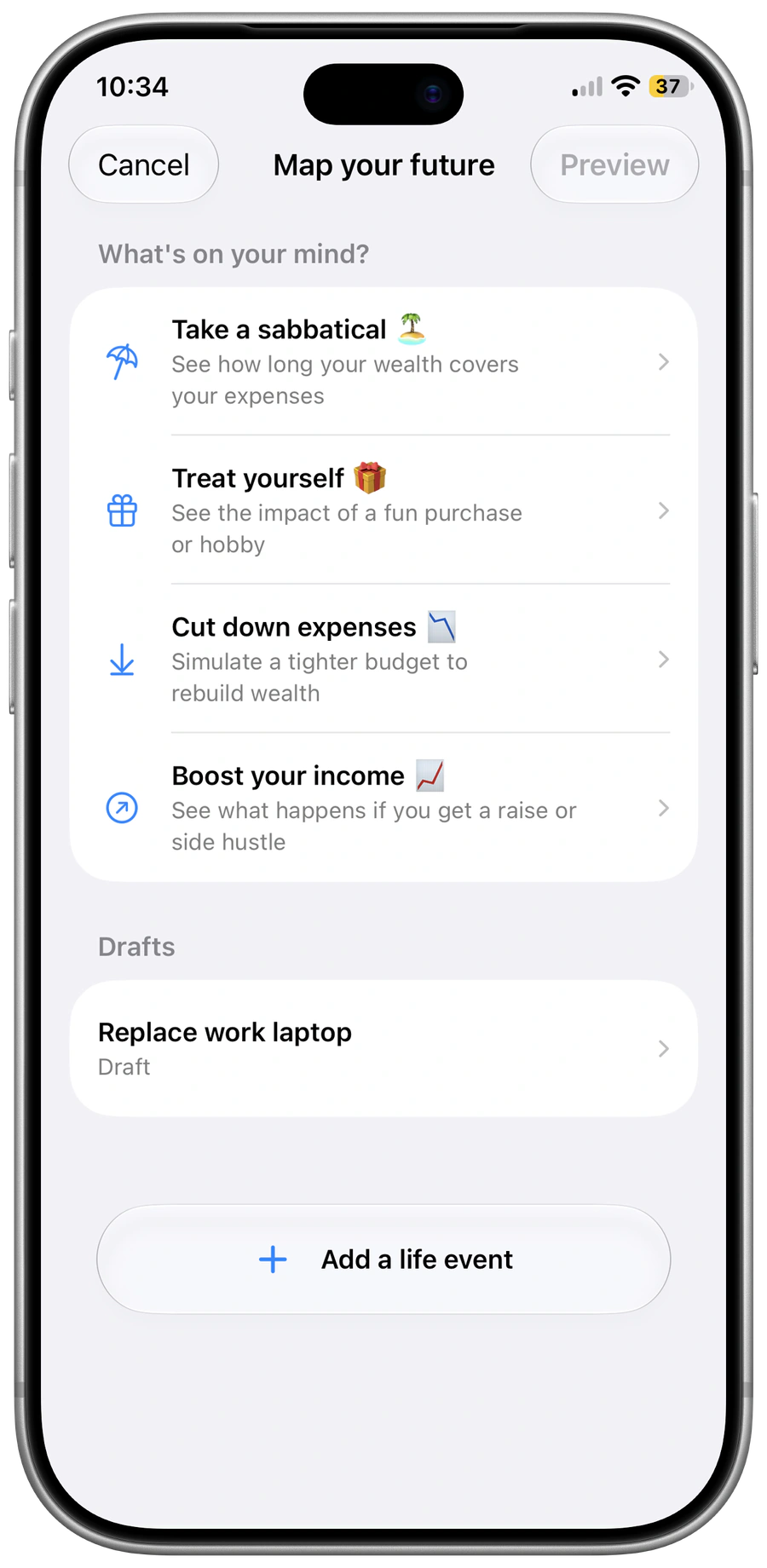
The screen shows where to begin. It does not show a calculated result for a particular break.
Keep the assumptions in view.
Growth and rising prices can change a long-term estimate. Open How far your money can go on home to review them. Use assumptions you want to explore, and see how a lower growth estimate changes the result.
A few useful answers.
What if I do not know when I will return?
Try a few possible dates. A longer pause shows a different possibility; it does not predict when you will find work.
Can I keep using my budgeting app?
Yes. Enter your current amounts in Pace to explore the break. No bank login is needed, and you do not have to move your transaction history.
Does the estimate tell me to leave my job?
No. It shows what your inputs and assumptions could mean. You choose the costs, uncertainty and remaining money you are comfortable with.
Try this with your numbers.
Start free with your current outlook and one saved decision. Pace Pro is a one-time purchase for more exploration. No bank login.